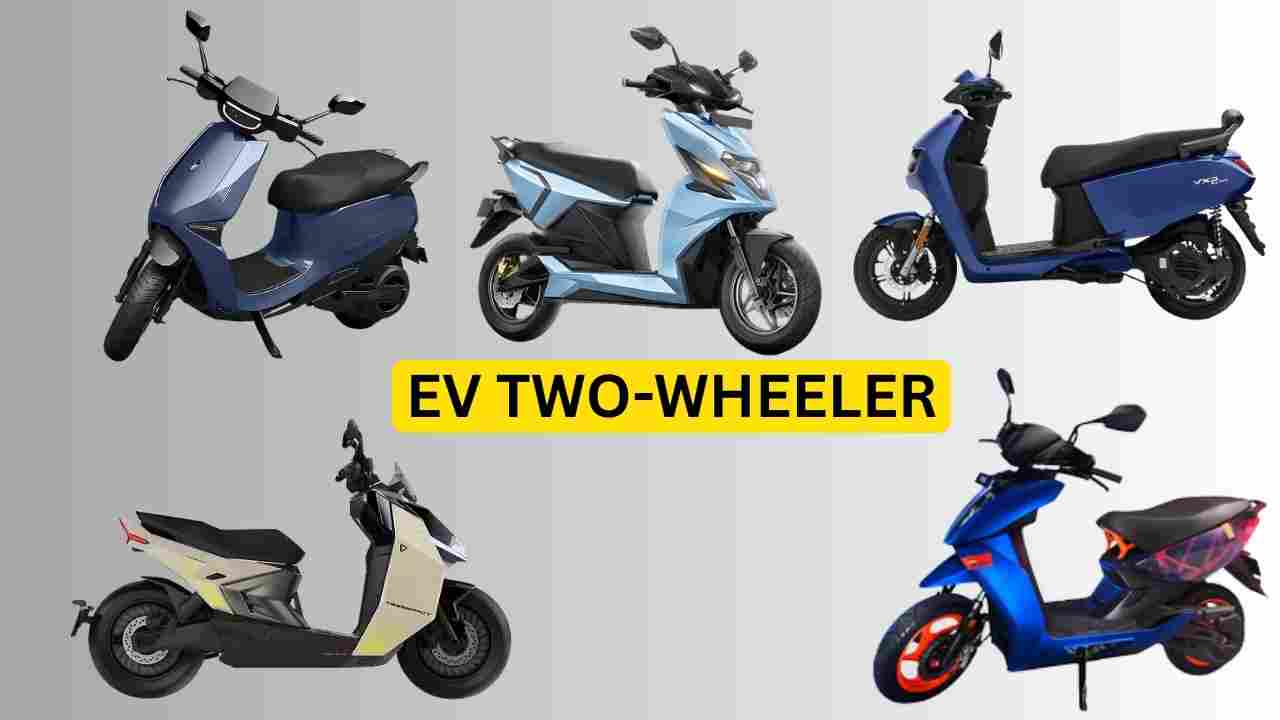
In 2025, electric two-wheelers grew fast in India, new models offered longer range, easy battery swapping and low prices to support green transport. Choices included premium bikes with advanced features and budget scooters for daily use. Many had safety tech and mobile apps, useful for city rides and family trips.
Prices ranged from ₹42,000 to ₹2 lakh, deliveries are ongoing with vehicles running 100–300 km per charge. Fast charging and wider service networks are helping more people switch to EVs.
Ather 450 Apex: Premium Zip for Urban Thrills
The Ather 450 Apex launched in early 2025, is the top model in the 450 series. It features Warp+ mode for fast acceleration and a 7-inch TFT screen with Atherstack 6 OS for navigation and updates, its 3.7 kWh battery gives a 157 km IDC range and a 100 km/h top speed with regen braking adding about 1.5 km per minute while charging.
Priced at ₹1.99 lakh, it offers efficiency, strong ride quality, Bluetooth connectivity and sturdy build for daily commutes, Safety is enhanced with traction control and ABS making it a premium benchmark among EV scooters.
Simple One Gen 1.5: Long-Haul Leader with Dual Packs
The Simple Energy One Gen 1.5, launched in mid-2025 has a 5 kWh dual battery (removable or fixed) with a 248 km certified range and fast charging to 80% in one hour, it uses an 8.5 kW motor that reaches 90 km/h top speed with a touchscreen console and improved cooling for Indian conditions.
At ₹1.66 lakh, it offers 200+ km real-world range, a 115 kg lightweight frame and app diagnostics for easy checks. Riders get three modes, ventilated seats and a 5-year warranty making it practical and reliable for long trips.
Learn More: Ultraviolette Tesseract – Hyper-EV Beast for Urban Domination
Ola S1 Pro Sport Gen 3: Performance Beast with Connectivity
The Ola S1 Pro Sport Gen 3, launched in Q2 2025 has a 5.3 kWh battery with 320 km IDC range and an 11 kW motor that goes 0–40 km/h in 2.6 seconds, it uses MoveOS 4 with hyper-charging access and sporty suspension, the scooter weighs 116 kg with 180 mm clearance.
At ₹1.88 lakh, it offers strong brakes, LED lights and app tracking. It is the fastest in its class with OTA updates keeping it fresh for daily rides.
Ultraviolette Tesseract: Swappable Innovation for Speed Demons
The Ultraviolette Tesseract, launched in early 2025 comes with swappable 3.5 kWh batteries that give a 260 km range, it also has AI-based app support to help riders track and improve performance, the scooter uses a 10 kW motor that can reach 125 km/h with USD front forks and a rear monoshock for smooth, sporty handling. Its weight is about 140 kg making it stable yet agile.
At an introductory price of ₹1.45 lakh, it stands out with its bold design and smart diagnostics, Safety is ensured with dual-channel ABS while comfort features like cruise control make long rides of around 80 km easy and enjoyable.
Learn More: Bajaj Pulsar 150 Updated – LED Glow for Timeless Thrills
Hero Vida VX2: Affordable Entry with Hero Backing
The Hero Vida VX2, launched in July 2025, comes with detachable batteries under the Battery-as-a-Service (BaaS) model, it gives a 92 km range and costs ₹45,000–₹58,000 with service plans or ₹85,000–₹1 lakh if bought outright, it runs on a 6 kW hub motor that reaches a top speed of 80 km/h, Riders can choose from three riding modes and the Hero Connect app adds features like geo-fencing and tracking.
The scooter is lightweight at 108 kg and uses 12-inch wheels, its IP67-rated battery makes it safe to use even in the rain, it is designed for families with comfortable two-person seating and LED lights that ensure safety during short trips of around 30 km.
Bajaj Chetak 3001: Iconic Revival with Metal Might
The Bajaj Chetak 3001, updated in mid-2025 comes with a strong all-metal body and a 3.2 kWh IP67-rated battery that gives a 127 km IDC range, it runs on a 4 kW motor with a top speed of 63 km/h, the scooter has Bluetooth telematics and a touchscreen dashboard that allow app-based controls, its retro design weighs about 134 kg and includes disc brakes for safety.
Priced between ₹99,000 and ₹1.07 lakh, it combines classic style with modern EV technology. It also offers a 5-year warranty. The scooter is comfortable for two riders has a reverse mode and is perfect for daily urban rides of around 50 km with low maintenance needs.
Learn More: Anniversary Adrenaline: Yamaha R3 70th Edition – Red-White Thrills for Track Lovers
TVS iQube 3.1 kWh: Family Upgrade with Smart Connect
The TVS iQube 3.1 kWh variant, launched in July 2025 comes with a 3.1 kWh battery that gives a 123 km range, it supports the SmartXonnect app which allows live tracking and over-the-air updates, the scooter runs on a 4.4 kW motor with a top speed of 78 km/h, its regen system adds about 10% extra range and the scooter is built strong at 118 kg with 150 mm ground clearance.
Priced at ₹1.2 lakh, it is a practical choice for families, offering reverse gear and underseat storage, it also has a seven-inch TFT display and is backed by TVS reliability making it safe and connected for daily rides of around 60 km.
Expected Prices in India
| Model | Price (Rs lakh, ex-showroom) |
|---|---|
| Ather 450 Apex | 1.29–1.99 |
| Simple One Gen 1.5 | 1.66 |
| Ola S1 Pro Sport Gen 3 | 1.16–1.88 |
| Ultraviolette Tesseract | 1.45 |
| Hero Vida VX2 | 0.45–1.0 (BaaS/outright) |
| Bajaj Chetak 3001 | 0.999–1.07 |
| TVS iQube 3.1 kWh | 1.2 |
Compared to rivals:
- Ola S1 Air: Rs 1.05 lakh
- Ather Rizta: Rs 1.11 lakh
- Bajaj Freedom: Rs 1.1 lakh
Learn More: Harley-Davidson X440T vs Rivals – Torque and Style Showdown
Key Specs: Battery, Range and Power
| Spec | Ather 450 Apex | Simple One Gen 1.5 | Ola S1 Pro Sport Gen 3 | Ultraviolette Tesseract | Hero Vida VX2 | Bajaj Chetak 3001 | TVS iQube 3.1 kWh |
|---|---|---|---|---|---|---|---|
| Battery | 3.7 kWh | 5 kWh | 5.3 kWh | 3.5 kWh | Detachable | 3.2 kWh | 3.1 kWh |
| Range | 157 km | 248 km | 320 km | 260 km | 92 km | 127 km | 123 km |
| Power | N/A | 8.5 kW | 11 kW | 10 kW | 6 kW | 4 kW | 4.4 kW |
| Top Speed | 100 km/h | 90 km/h | 125 km/h | 125 km/h | 80 km/h | 63 km/h | 78 km/h |
| Weight | 108 kg | 115 kg | 116 kg | 140 kg | 108 kg | 134 kg | 118 kg |
Key Features: Tech, Safety, and Comfort
- Range & Charge: 92-320 km with fast options (80% in 1 hr).
- Design: LED lights, digital dashes, lightweight frames for easy handling.
- Tech: Apps for tracking, OTA updates, Bluetooth connectivity.
- Safety: ABS, regen, ADAS hints in premiums.
- Comfort: Modes for eco/sport, USB ports, two-up seating.
Learn More: Naked Fury Unleashed: Ducati Streetfighter V2 & V2S – Agile Italian Muscle for Indian Roads
Why These 7 2025 Launches Electrify the Scene
In 2025, electric two-wheelers in India grew quickly with different brands offering unique strengths, Ola focused on speed, Simple gave longer range and Hero kept prices low, covering budgets from ₹45,000 to ₹2 lakh for riders who need more than 100 km daily.
Models like Ultraviolette with swappable batteries reduced waiting time for charging, while Bajaj and TVS provided reliable service networks that families trust, all these scooters can be charged easily at home and the industry is aiming for 50 lakh sales in 2026, showing how practical electric vehicles are becoming compared to petrol bikes.
Comparison with Rivals: How 2025’s Top 7 Stack Up
| Model | Price (Rs lakh) | Range (km) | Top Speed (km/h) |
|---|---|---|---|
| Ather 450 Apex | 1.99 | 157 | 100 |
| Simple One Gen 1.5 | 1.66 | 248 | 90 |
| Ola S1 Pro Sport Gen 3 | 1.88 | 320 | 125 |
| Ultraviolette Tesseract | 1.45 | 260 | 125 |
| Hero Vida VX2 | 0.45–1.0 | 92 | 80 |
| Bajaj Chetak 3001 | 1.07 | 127 | 63 |
| TVS iQube 3.1 kWh | 1.2 | 123 | 78 |
| Ola S1 Air | 1.05 | 125 | 90 |
| Ather Rizta | 1.11 | 160 | 80 |
Learn More: Sporty Street Surge: Hero Xtreme 160R 4V – Cruise Easy with Fresh Tech
Final Verdict: Why 2025’s 7 EV Two-Wheelers Spark Change
In 2025, Ather and Ola launched electric two-wheelers in India priced from ₹45,000 to ₹2 lakh, offering 92–320 km range, they include apps and safety features with options for budget buyers, long-distance riders and speed lovers. These launches bring more variety than before and mark a quiet shift toward electric mobility, helping riders save in 2026.